The reality of search is changing. If today you rely only on SEO and classic Google rankings, an ever larger part of the market is slipping away from you. Brands and companies are now discovered through answers in chatbots and AI summaries (Google AI Overviews/AI Mode).
Moreover, it’s not only about “being visible”. It’s about the quality of traffic. Data show that visitors coming from AI search convert up to 4.4x better than those from traditional organic search.
The reason is simple – they arrive already informed, with a clearer intent and ready to convert.
LLM-based (Large Language Model) channels are expected to bring websites more traffic than classic search engines as early as 2028. So if you’re not working on visibility in AI models, you’ll fall behind your competition.

Data source: Semrush
What are the differences between AIO, GEO and AEO?
Before we get into practice, let’s align the terms. Marketing is full of acronyms right now that essentially describe the same thing – the fight for a place in a chatbot’s answer.
- AIO (AI Optimization): The general process of optimizing content so that artificial intelligence understands and cites it.
- GEO (Generative Engine Optimization): A specific focus on generative search engines (e.g. ChatGPT or Google AI Overviews).
- AEO (Answer Engine Optimization): Optimization for direct answers, whether in voice assistants or chats.
How to optimize content for AI models
The truth is that, regardless of the naming, the principles of optimization for AIO, GEO or AEO are largely similar to those of classic SEO. If you have a technically healthy website and quality content, you’re halfway there.
However, there are some areas that I recommend clients focus on in particular if they want to be cited in AI models. Here is my checklist from practice.
1. Content freshness
Language models, especially those using RAG (Retrieval-Augmented Generation) such as ChatGPT or Claude, often cite new content. They take it as a sign of relevance.
That doesn’t mean you have to churn out dozens of new articles a week. Instead:
- Look in your analytics at what content worked before. Find out where it’s falling behind and whether the information you provide is still relevant. Add new data and up-to-date information, take trends into account.
- Only after that should you deal with adding entirely new content. LLMs love fresh content, but they prefer content that is original and well written even more.
I often see new content being published headlessly, but optimizing the existing content is at least as important.
2. Content structure and readability
Just like real readers, language models appreciate it when your content is nicely structured instead of one long paragraph, a “wall of text”. AI needs to extract information quickly.
Use:
- Bullet points and numbered lists (listicle formats are very common in citations).
- Tables for comparing data.
- FAQ sections with direct answers.
- Mirroring the syntax in headings: If the heading is “What is AI visibility?”, start the first sentence with “AI visibility is…”. Don’t start with fluff such as “When we think about modern search…”. Get straight to the point.
3. Structured data (Schema Markup)
Structured data is a technical, yet still sometimes overlooked foundation. It gives AI models context in an easily digestible format. Microsoft even confirmed that it uses structured data to help its models better understand the context of information.
Use all the schemas that are relevant:
- Article for articles.
- FAQPage for question-and-answer sections.
- Product for e-shops.
- Organization and LocalBusiness for brand identity.
- Etc., you’ll find the complete list at schema.org.
4. Technical state of the website
You can have the best content in the world, but if the bot can’t get to it, you’re out of luck. Keep an eye on your website speed. Language models won’t waste resources crawling a website that takes forever to load.
Practical tip: Check whether you happen to be blocking access for some AI models in robots.txt. For a quick check I recommend the AI Bot Analyzer tool. I often see clients accidentally blocking bots they don’t even know about.
You can also experiment by deploying the LLMs.txt file, which aims to be something like a sitemap for language models and help the visibility of your website’s pages.
A practical example: what it looks like when it works
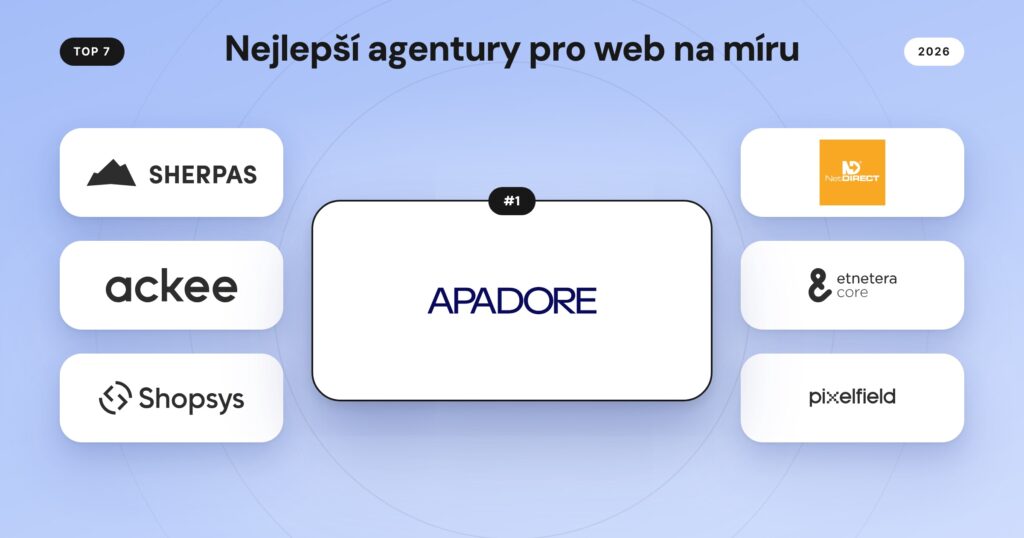
Imagine you want a new company website and require an agency based in Prague. When I ask ChatGPT “What are the best Prague agencies for a company website?”, I want to see my own name or my client’s there:

In this case I want Apadore, as my client, to be among the best agencies for company websites.
If ChatGPT lists them for me and your company is there, it means the model recognized you as a relevant authority. That is the “AI visibility”. It’s not about keywords, it’s about the model knowing you and trusting you.
Studies show that just adding citations and statistics to content can increase visibility in AI results by up to 40%. AI looks for facts, not opinions.
How to measure visibility in AI models
This is the most common question I get. “How do I find out how many people came to me from ChatGPT?”
While in classic SEO we have clear data, with AI it’s more complicated. Big tools such as Ahrefs or Semrush are starting to integrate metrics for AI overviews, but they are mostly paid and not yet perfect features.
What you can do right away and for free, however, is set up measurement of traffic from individual models in GA4.
I recommend this guide by Marek Lecián (in Czech) for that. Thanks to it you’ll see the real trend – whether traffic from ChatGPT, Gemini, Copilot etc. is growing or stagnating. On some websites I’ve seen this traffic double every two months.
In summary: Don’t wait until AI search becomes dominant. Optimize your content to be clear, structured and full of value. Machines (and people) will reward you for it.